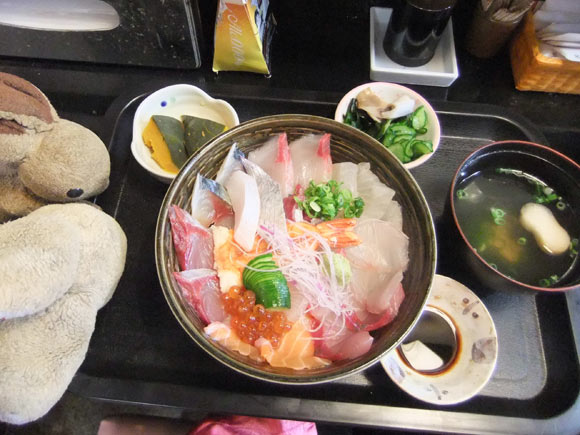
Walking back into town, we walk past the fish restaurant Izutsu, one of the many interesting sounding eateries mentioned in the festival guidebook. Since it's lunchtime, we pop in and order Seafood Don set lunch. For 980yen (10 Euro), it comes with a massive portion of fresh fish I can hardly finish (but manage in the end.) The mackerel is fresh (ie. not marinated), which you can never get elsewhere as mackerel goes bad quickly. But here in Ohita region, mackerel and horse mackerel, caught one by one with fishing rods, are local specialities
 . .
|
|
|
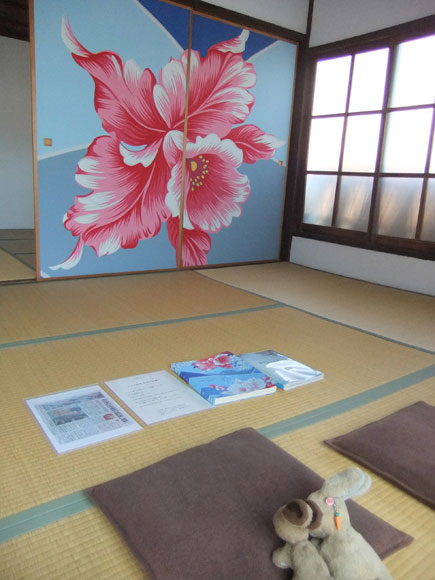
More art after lunch. Upstairs at the Beppu Project merchandise shop, we see Michael Lin's paintings on sliding doors, from the previous festival. Then we visit Kiyoshima Appartments, where young artists have been living and working, again since the last festival. |
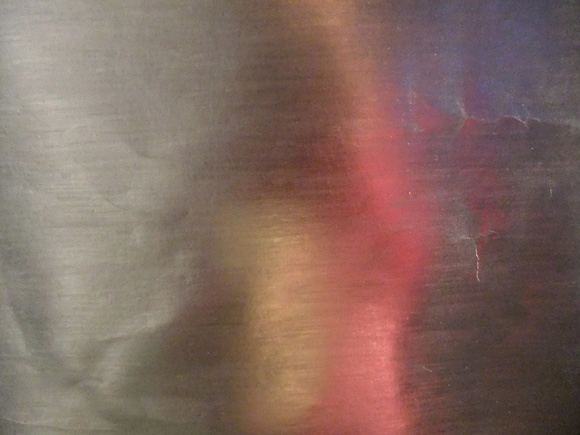
Usako & I reflected in Masamitsu Katsu's 250 x 250cm pencil drawing. |
Kousa & I. |
| In the evening we walk through the shopping arcade, to attend a seminar - held weekly by Beppu Project, even outside the festival season. |
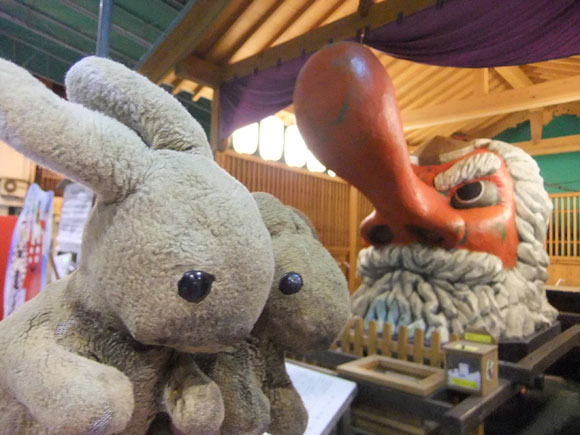
Shrine whose deity is a long-nosed goblin, in the middle of one of the arcades. |
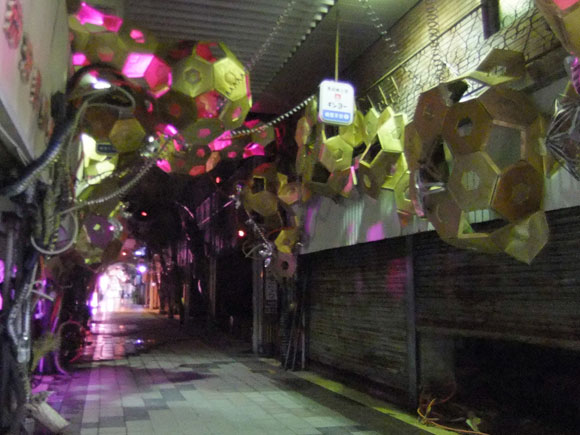
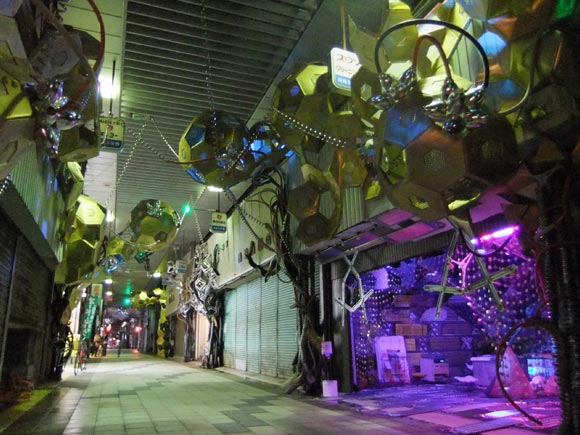
An installation (and a stage setting for dance performances) using junk from the shops. |
|
|
Wednesday 14 November: Today we were planning to see Christian Marclay's installation by the ferry port, but it's closed due to extremely strong wind. Oh well... (At least we saw that on the festival website before we set off.)
So instead, we walk along the arcades again, partly to look at the venues we missed previously, and to check out Tsuyoshi Ozawa's other pieces: mini Towers of Babel in various shops, made with products on sale. These are in conjunction with his Beppu Tower piece, and based on the regional tradition of creating statues out of all kinds of material. | |
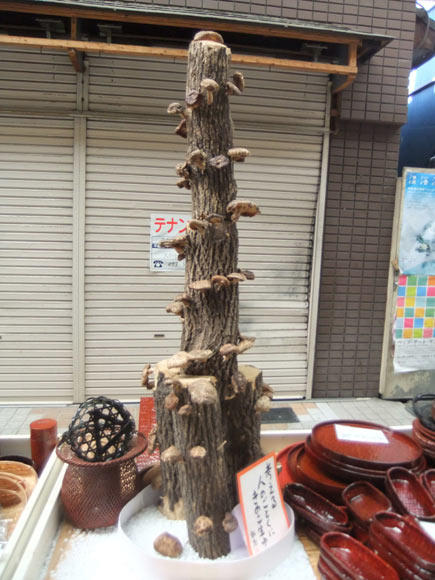
A shiitake tower. Shiitake is another well-known local produce, so I bought a bag of dried shiitake here. |
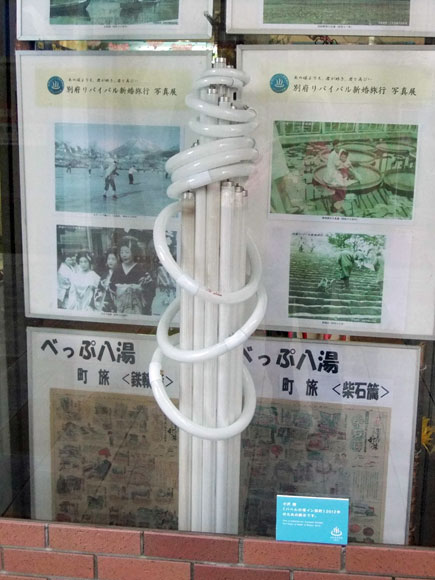
Fluorescent lamp tower, at an electrical shop. |
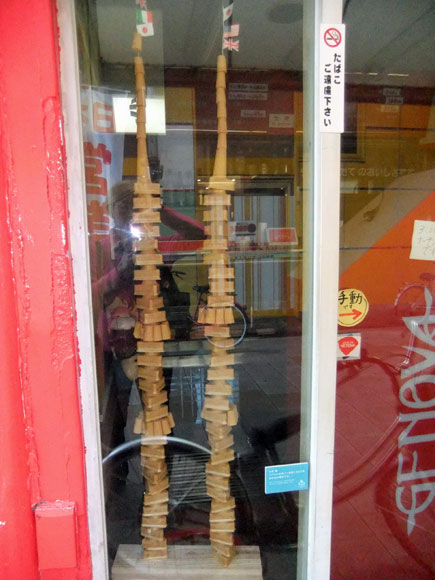
Gelato cone tower. |
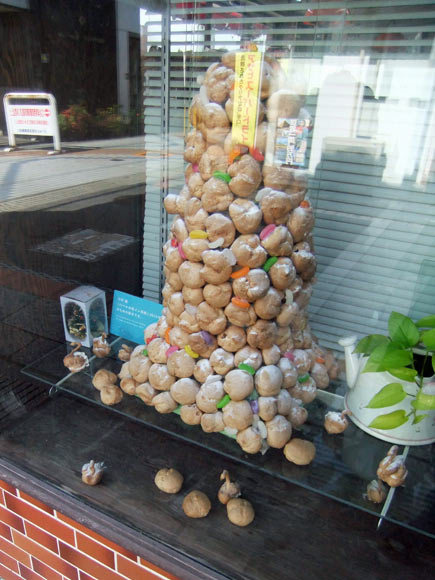
Cream puff tower. |
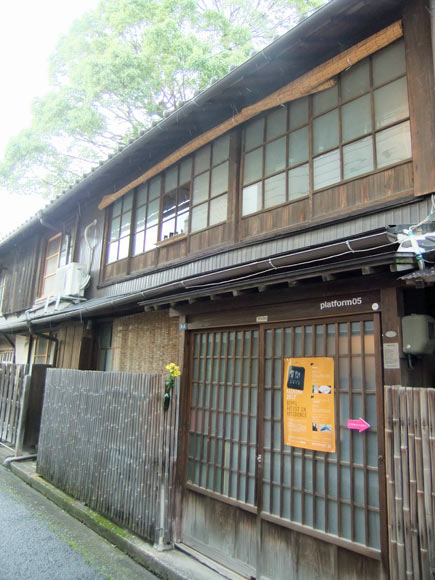
| One of the great things about this festival is that it's not just a one-off event that happens every few years but provides long-term basis for art activities in Beppu. The unused shop spaces and houses, that were rennovated and turned into exhibition venues for the previous festival, have been constantly used as such, as well as providing artists-in-residence schemes, and promoting local traditional handicraft to tourists. | |
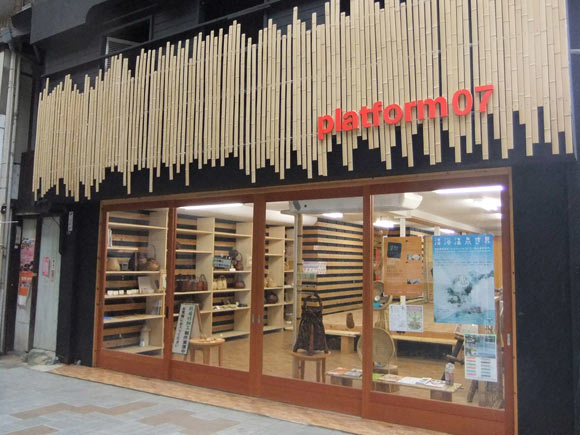
One of "platforms", where you can watch the traditional bamboo products being created. Right: another old house turned into a gallery. |
|
|
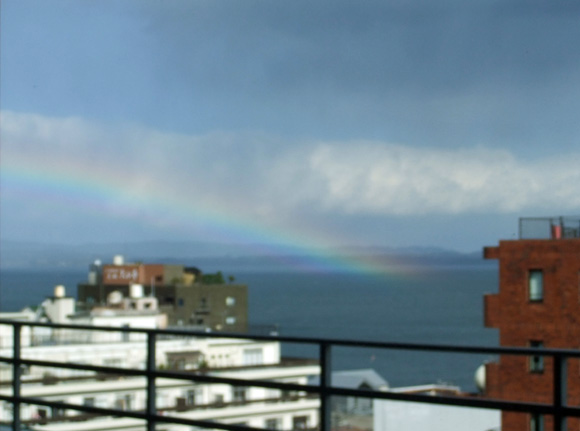
Stopping at Tokiwa Department Store for lunch, we see a rainbow out of the window. (Apologies for a very blurry photo!) |
|
So that was our 3 days in Beppu, where we've had a great fun. People here are sooooo friendly, wherever you go you end up chatting to shop owners, festival staff and total strangers!
There is a detailed review of the festival on AngloItalian, Follow Us!, a website about art and tourism. | |
| To Part 5 (Hiroshima, Osaka, Tokyo, Shizuoka...) | |