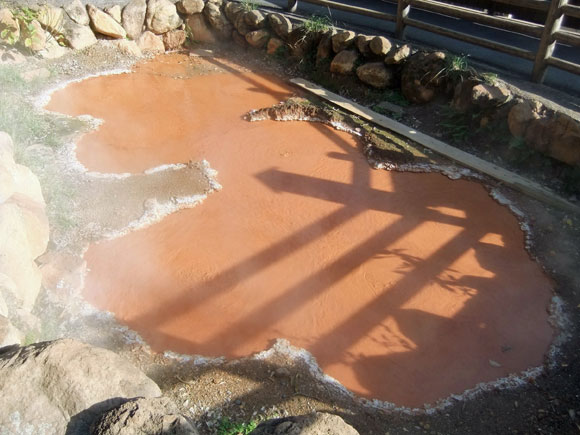
Red hot mud at Cooking Stove Hell, so called as they used to cook meals to offer the Gods at local shrine's big festivals. |
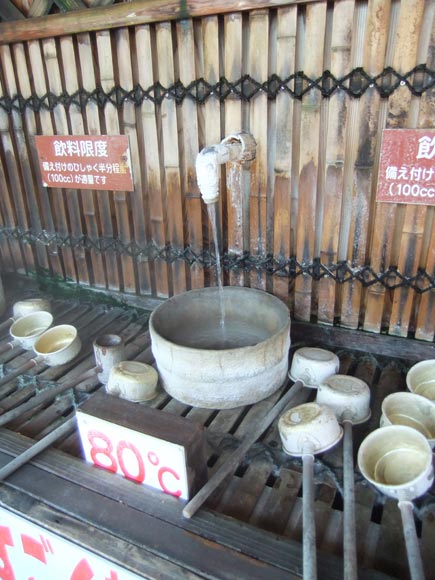
Here you can drink the hot spring water. |
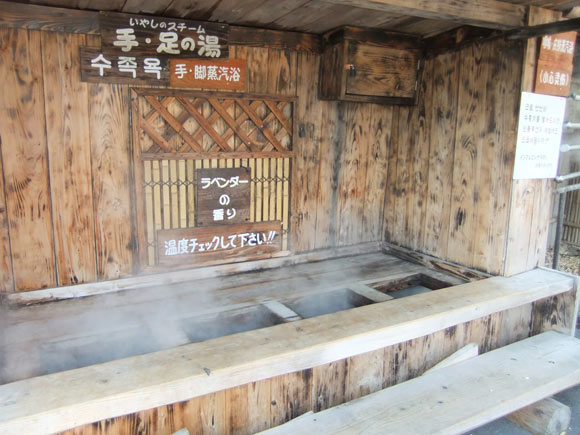
Steam bath for arms and legs. |
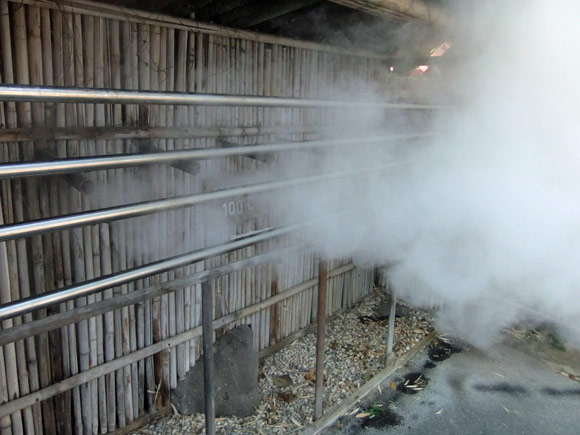
Steam for inhaling - supposedly good as flu prevention. |
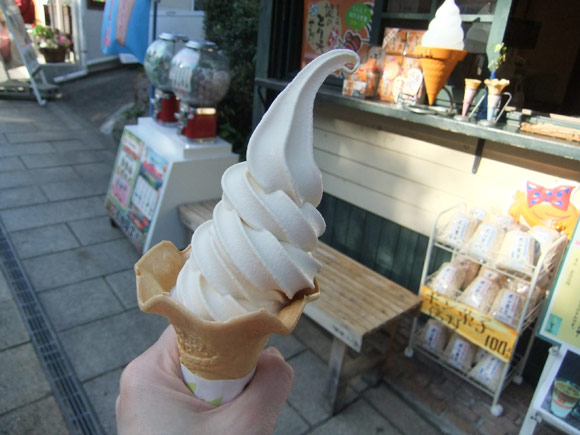
On the way back to the bus stop, I can't resist this miso soft ice - doesn't taste of miso but it intensifies the flavour. |
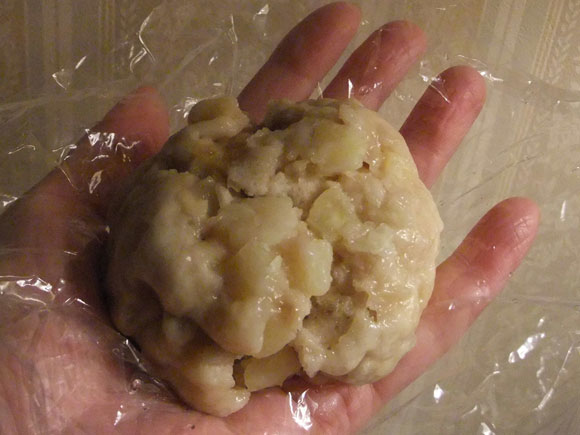
And this is for later: steamed bun with sweet potatoes, another local speciality. |

Back in town and having a walk around, where we spot this sign. An egg hair salon?? |
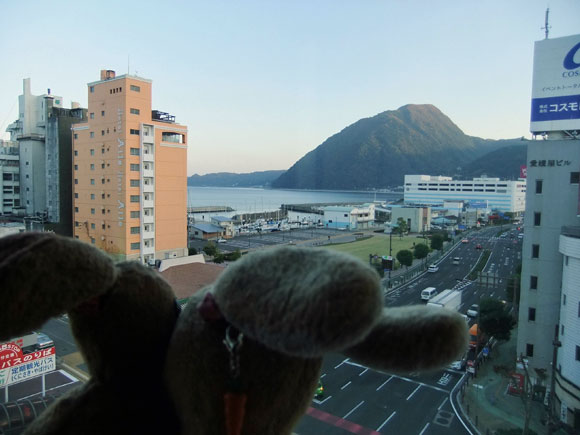
A view from the top floor of Tokiwa Department Store, where we see installations by Ann Veronica Janssens. |
|
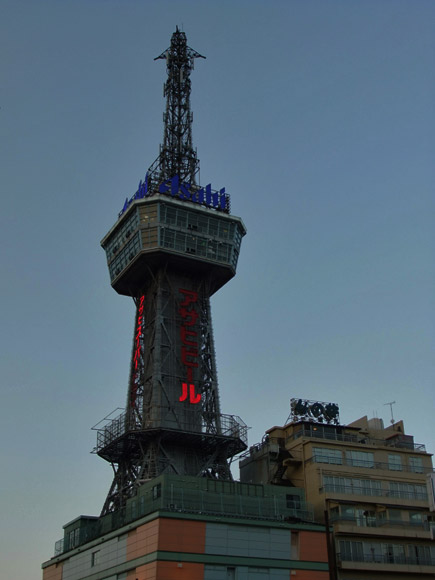
At dusk we go to Beppu Tower (one of the oldest towers in Japan), to see Ozawa Tsuzoshi's work: letters of Asahi Beer neon sign flashing at random, to create a concrete poem.
And that's it for today. |
| Tuesday 13 November: This morning we start off at the mainline station, to take a train to Hamawaki area. Outside the station is a statue of Kumahachi Aburaya, who originally promoted tourism in Beppu and made it a well-known spa town. Apparently he loved children, hence the kid holding onto him. |
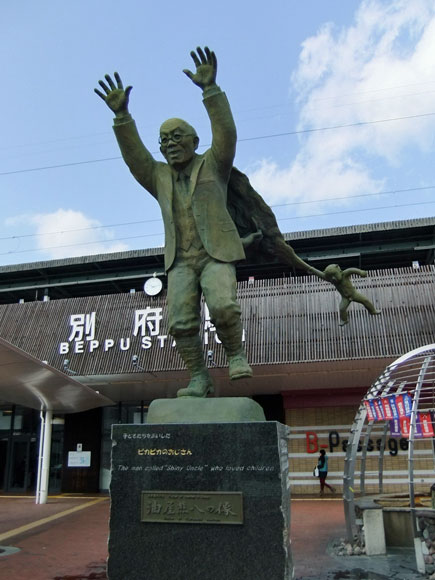
|
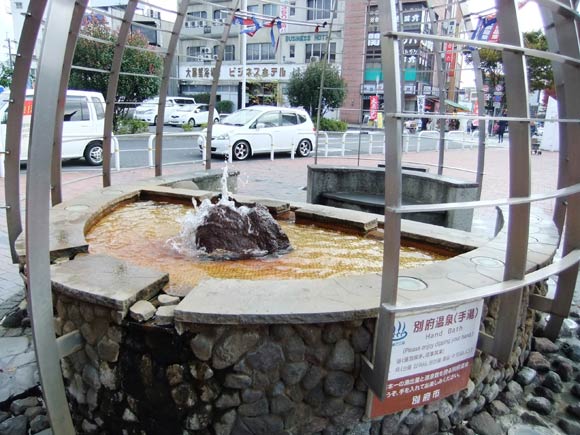
A hand bath next to the statue. |
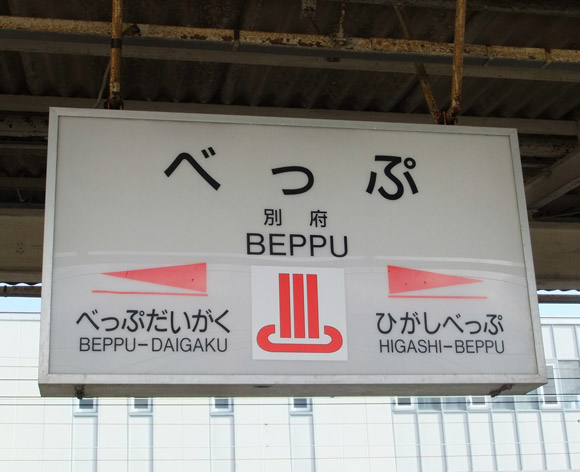
Spa sign on the station sign. |
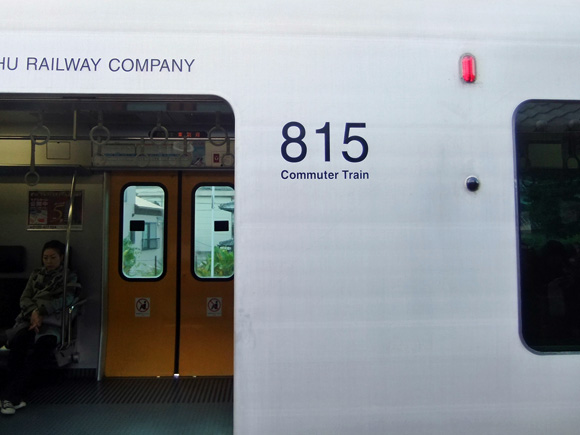
They kindly tell you what kind of train you're about to board. |
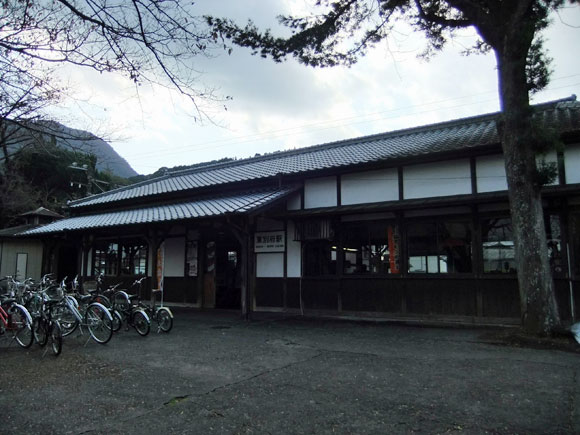
Nice & old-fashioned station building at Higashi-Beppu. |
| Looking at installations by Satoshi Hirose involves walking around the whole area, which is said to be where the whole spa development started in the 12th century. The first stop is the information centre, an old residential house used as a salon for local elderly residents, rennovated for the project. The ceiling is open and covered with muslin, on which slices of kabosu are placed for drying. | |
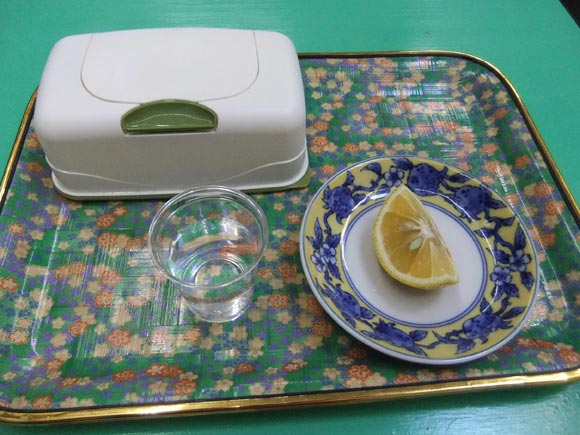
Visitors are asked to sit down and served fresh kabosu juice (with wet tissue for cleaning the fingers!) |
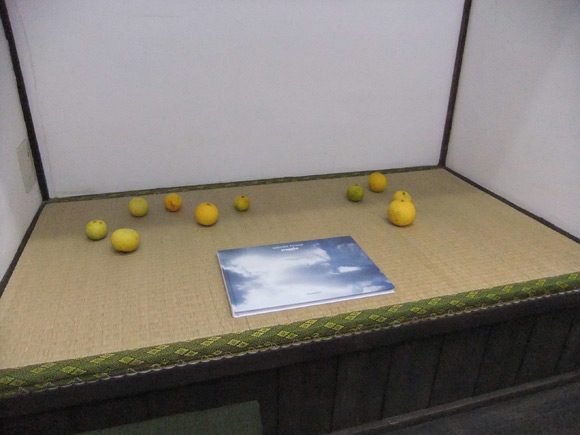
More kabosu in the alcove too. |
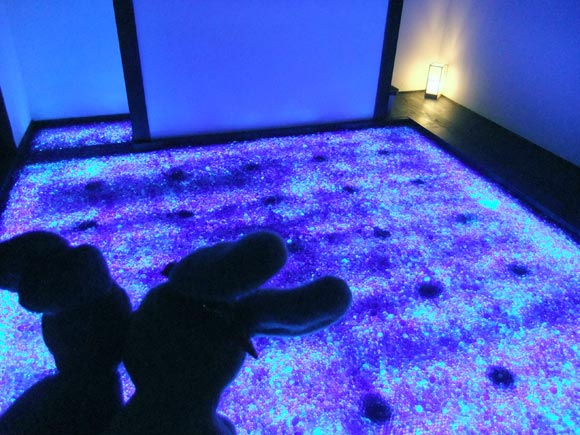
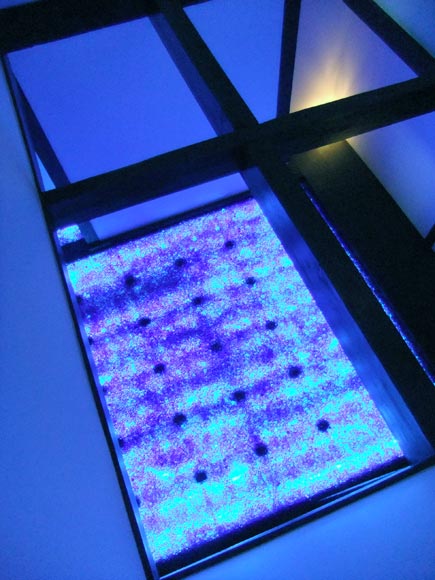
In another rennovated house, the floor is laid with small blue glass balls. Right: seen from the floor above. |
|
| To Part 4 | |